The Architecture of Warmth: A Studio Guide to Winter Layers That Move
Photo: Unknown, Public domain, via Wikimedia Commons
Winter dressing in New York is rarely a simple question of temperature. It is a negotiation with wind tunnels, overheated interiors, wet sidewalks, and the practical demands of a day that may begin in a studio and end over dinner. In the Jodi Arnold NYC workroom, the three-layer rule is therefore not treated as a rigid formula. It is treated as architecture: a base that supports, a middle that insulates, and an outer that gives the whole composition its shape. The goal is not to wear more. It is to wear better, with enough structure that each layer can be removed without collapsing the look.
Begin With a Base That Earns Its Place
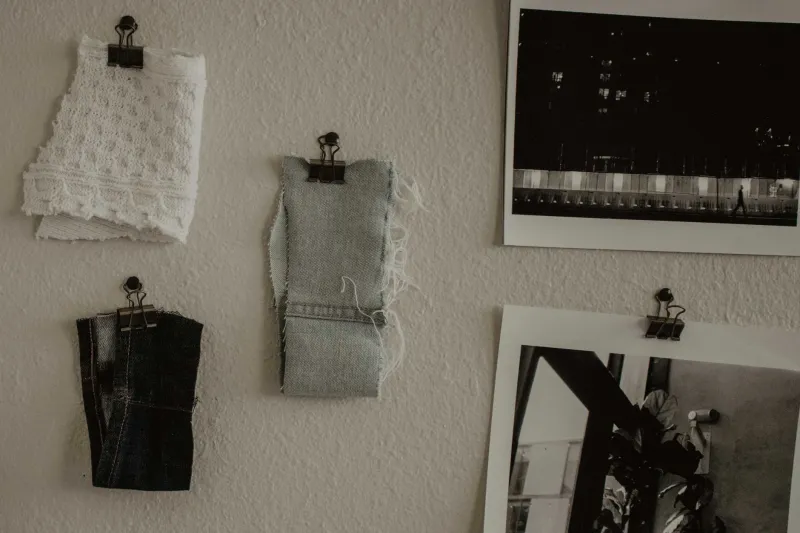
The first layer should be the most disciplined. It sits closest to the body, so it must be smooth, breathable, and quiet under everything else. Fine-gauge merino, washable silk, and close-fitting cotton knits are the most reliable choices in the studio. They provide warmth without adding visual weight, and they allow the middle and outer layers to do their work without friction.
A common mistake is to begin with the heaviest knit available. That instinct often produces bulk where it is least useful: at the waist, under the arm, and across the back. A base layer should feel almost negligible when the coat is closed. When it is exposed indoors, it should still look intentional. For fit sessions, we favor base pieces that hold their shape after movement, because a layer that twists or rides up will compromise every layer above it.
Let the Middle Layer Carry the Structure
The middle layer is where warmth and silhouette meet. It should not be the thickest piece in the wardrobe, nor should it be purely decorative. Think of it as the interior construction of a garment: a thin quilted vest, a fine cashmere crewneck, a compact wool cardigan, or a lightweight down liner. Each offers insulation while preserving the line of the body.
In testing, we look at the armhole first. A middle layer that binds at the shoulder will make even a well-cut coat feel restrictive. We also consider the collar, because the neck is where winter dressing either feels clean or chaotic. A streamlined crewneck or a neat turtleneck creates a calm foundation for the outer layer. A bulky shawl collar may be beautiful on its own, but it can crowd a coat and make the whole look feel overstyled.
Choose an Outer Layer That Frames Rather Than Fortifies
The outer layer should provide protection, but it should also provide proportion. A dense wool coat, a trench with a removable liner, or a water-resistant shell can all serve this purpose if the cut is considered. The best winter coats are not necessarily the heaviest. They are the ones that close cleanly, allow the arms to move, and leave room for a middle layer without appearing oversized.
For the studio, we favor outerwear with a defined shoulder and a restrained volume through the body. A coat that is too narrow will compress the layers beneath it; a coat that is too generous will make the wearer look as though they are borrowing someone else's wardrobe. The ideal is a frame: enough space for warmth, enough tailoring to maintain intention.
Fabric Combinations That Behave
Not every warm fabric works well beside another. Merino under cashmere under dense wool is a reliable progression because the surfaces glide rather than cling. Silk under a fine knit under waxed cotton is another useful combination for days when precipitation is likely. The principle is to avoid friction. A brushed wool sweater under a tight coat lining can catch and bunch; a smooth base beneath it prevents that disruption.
We also consider weight distribution. A lightweight base, a moderate middle, and a substantial outer layer create a clean vertical line. When the middle layer is too heavy, the body appears compressed in the center. When the outer layer is too light, the silhouette loses its finish. The balance is not about equal weight. It is about appropriate weight in the appropriate place.
The Unexpected Trick: The Hidden Collar
The styling trick used most often in the studio is not a visible accessory. It is a hidden collar. A long silk or fine wool scarf is rolled into a soft band, wrapped close to the neck, and tucked inside the coat rather than draped over it. The result is a sealed neckline without the bulk of a heavy scarf, and without the visual noise of an added layer.
This detail matters in New York, where cold air moves horizontally along the street. The hidden collar keeps warmth where it is most quickly lost, and it allows the coat to remain the primary shape. It also makes a coat without a substantial collar feel warmer than it is. The trick is not decorative. It is structural, and it is easily removed indoors.
From Studio to Street
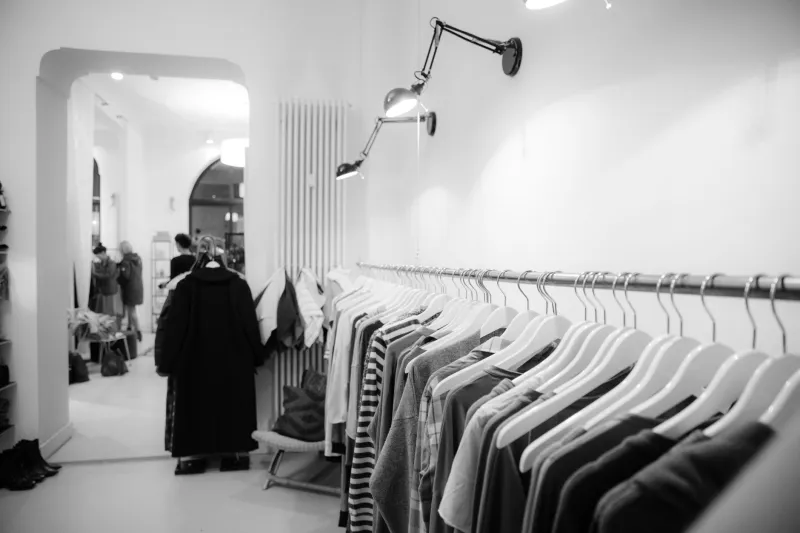
Every winter piece in the studio is tested in motion. Fit models sit, stand, reach, carry a bag, and walk across the room. A layer that looks correct in a mirror but restricts the shoulder is not finished. A coat that photographs well but catches at the elbow is not finished. Winter dressing must accommodate the body's actual movement, not only its still silhouette.
The final test is reversal. We begin with the outer layer and remove pieces one at a time, checking that each stage remains presentable. If the look only works when fully assembled, it is too dependent on bulk. The best winter wardrobe is composed of layers that can stand alone and together.
A Case for Fewer, Better Layers
The reconsidered three-layer rule is ultimately an argument for restraint. A smooth base, a structured middle, and a framing outer layer will carry a person through most New York winter days with more ease than a stack of heavy pieces. The result is not minimalism for its own sake. It is a practical form of polish, one that allows warmth, movement, and a clear line to coexist.