Golden Hour and Gaffer Tape: Notes from a Two-Day Rooftop Lookbook
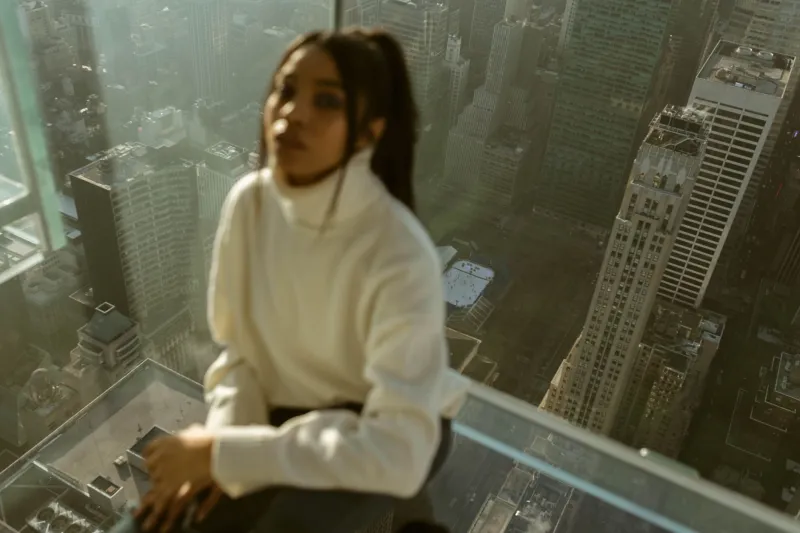
There is a particular kind of silence that falls over a rooftop at 5:40 in the morning, before the city has fully committed to its day. That is where our lookbook began — not with a flash of inspiration, but with a freight elevator, a garment rack zip-tied to a dolly, and a thermos of coffee being passed around like contraband.
Every seasonal lookbook asks the same question: how do you translate cloth on a hanger into a feeling? This time, with twelve looks to photograph and a budget that demanded discipline, the answer had to be found in two days, one location, and whatever light the sky was willing to give us.
The Case for Fewer Moving Parts
In earlier seasons, we did what many small brands do — spread the shoot across multiple locations, chasing variety and ending up with a scattered visual story. This year we made the opposite bet. One rooftop in the Garment District, fifteen stories up, with the water towers and setbacks of Midtown as our only backdrop.
The constraint sharpened everything. With a single location, styling decisions became bolder, because the clothes had to carry the variety the environment could not. A tailored wool coat read differently against pale brick than it ever would against a studio sweep. The city did half our work for us, and it never sent an invoice.
Casting for a Point of View
Casting is where a lookbook quietly succeeds or fails. We were not looking for the most recognizable faces; we were looking for women who could wear clothes as though they had chosen them themselves. Our casting call was brief and specific: natural movement, minimal styling, patience for wind.
Two models carried all twelve looks across the two days. It is a demanding structure — the wardrobe changes, the light changes, but the gaze must stay consistent — yet it gave the book a coherence that a larger cast would have fractured. On a small budget, fewer people is not a compromise. It is an editorial position.
The Schedule, Such as It Was
A lookbook shoot runs on three timetables at once: the sun's, the models', and the wardrobe's. Ours looked roughly like this:
- Day one, dawn: Soft, cool light for the lighter palette — cottons, silks, the pieces that photograph best before the city wakes.
- Day one, midday: Fittings, steaming, and a regrouping while the light turned flat and unflattering overhead.
- Day one, golden hour: Ninety minutes of warm, directional light. This is where the hero shots live.
- Day two: Repeat, with the darker looks, plus pickups and detail frames — cuffs, collars, the interior of a pocket.
The golden-hour windows were non-negotiable and, inevitably, partially stolen by a cloud bank on the second evening. We had planned a sunset finale in the black evening coat; we got eleven usable minutes of hazy amber instead. The frame we ultimately used came from minute six. There is a lesson in that, though I am still deciding what it is.
What a Shoestring-Chic Budget Actually Buys
For the sake of other small brands considering their own shoots, here is the honest arithmetic. We spent on four things and economized everywhere else.
We paid a photographer whose portfolio we trusted rather than a production company. We hired a stylist for one day only, with the second day styled in-house from her shot list. We booked models through a boutique agency at a day rate rather than through a full agency booking. And we fed everyone properly — a decision that sounds soft until you watch a crew hold a pose in October wind.
What we did without: a professional lighting package, a hair-and-makeup team on day two, and any form of video content. A single reflector, a portable steamer, and a friend with a clipper kit covered the rest. The images do not suffer for it. Restraint, it turns out, photographs well.
What Did Not Make the Edit
No honest account of a shoot ends with the final selects. Roughly a third of what we photographed will never be seen, and some of it deserved better.
A full look shot against the rooftop's mechanical housing — meant to read as urban grit, read instead as an HVAC obstruction. A breezy moment with a scarf that the wind turned into a wrestling match. Twelve nearly identical frames of a dress that looked wonderful to the eye and lifeless to the lens. There was also the styling experiment — a belt worn doubled — that everyone on set loved and that no one, looking at the contact sheets, could explain.
Cutting is part of the craft. A lookbook is an argument about what a collection means, and an argument with too many clauses persuades no one.
Lessons Worth Carrying Forward
Three things, in closing, that I would tell any designer standing where I stood last month.
First, light is the cheapest luxury available to you. Schedule ruthlessly around it and let everything else flex. Second, a single strong location will outperform three adequate ones — coherence is a form of polish that money cannot otherwise buy. Third, and most simply: the images that end up defining the collection are rarely the ones you planned for. Leave room in the schedule, and in the edit, for the frame you did not know you were shooting.
The lookbook is live now, twelve looks, two days, one rooftop. What the final pages show is the collection. What they remember is the morning the city was still ours.