Two Days to a Season: The Unfashionable Speed of Choosing Color
There is a moment in the studio, before the first sketch is pinned to the wall, when a season has no shape but plenty of atmosphere. The light through the windows is still winter-gray. The cutting table is clear. And somewhere in the mind, a color is already insisting on itself—a particular blue, a faded olive, a cream that is almost but not quite white. In this studio, that insistence is not indulged for months. It is tested, edited, and locked within forty-eight hours.
The Rule, Plainly Stated
The 48-hour color rule is not a marketing exercise. It is a working discipline. For two days—usually a Tuesday and a Wednesday in early January, or a Thursday and Friday in July—the collection's palette receives the kind of concentrated attention most studios reserve for a finished garment. By the end of the second day, the season's color story is fixed. Not sketched. Not sampled. Fixed. Sketches follow the palette; they do not lead it.
This runs against the conventional wisdom of the fashion calendar, where color can be revisited at fittings, debated in showroom meetings, adjusted after a buyer's comment, and quietly softened by a committee that means well. In my experience, that is how a palette loses its nerve. Color chosen quickly and early tends to hold. Color chosen slowly and by consensus tends to blur.
First Morning: The Wall and the Instinct
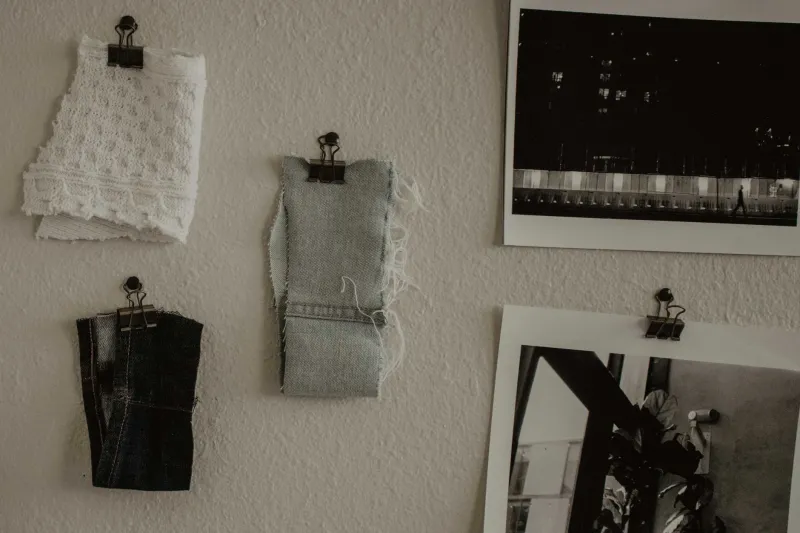
The first morning is intentionally undisciplined. The wall at the back of the studio is cleared. Swatches arrive in no particular order: a wool crepe from a mill contact in Pennsylvania, a washed silk from a supplier downtown, a linen that looks better in the late-afternoon light than it has any right to. There are tears from magazines, paint chips from a hardware store on Lexington Avenue, a scrap of vintage ribbon, a photograph of a brownstone doorway in Brooklyn. Nothing is labeled. Labeling is for the second day.
The point of the first morning is not to decide. It is to notice what keeps pulling the eye. A designer learns to distrust the swatch that requires an explanation. If a color needs a story before it can be liked, it is probably a color for someone else's collection. The ones that stay on the wall without argument—those are the candidates.
By noon, the wall is crowded and slightly chaotic. By three o'clock, three or four tones have begun to separate themselves from the rest. I do not force that separation. I let it happen. The first day is about instinct, and instinct is faster when it is not asked to justify itself.
The Afternoon Cut
Late on the first day comes the only ruthless part of the process. The wall is reduced by half. Not by a committee, not by a vote, but by a simple question: does this color make the others better? A beautiful swatch that isolates itself is removed. A difficult color that sharpens its neighbors stays. This is the opposite of how most people edit a palette. They keep the pleasant and discard the awkward. In a collection, the awkward color is often the one doing the work.
Second Day: Living With It
The second morning is quieter. The remaining swatches are pinned in a single horizontal line, the way they will eventually appear on a lookbook page or a runway lineup. Coffee is made. The radio is low. The palette is not discussed; it is inhabited.
This is the part of the rule that cannot be rushed, even though the rule itself is short. The second day is for testing the palette against the reality of the studio: how the colors look beside skin, beside the neutral of a canvas tote, beside the black of a garment bag. A palette can look superb on a wall and fail in the hand. It can look flat on a table and come alive against a wool coat. The second day is where that becomes clear.
By late afternoon, one or two tones are adjusted—not replaced, adjusted. A red is deepened. A pale pink is allowed to remain pale, against the instinct to make it useful. The final palette is photographed, labeled, and pinned above the sketching table. The forty-eight hours are over. The season has a color story.
From Swatch to Runway
What follows is the long, ordinary work of making clothes. Sketches are drawn in relation to the palette rather than in hopes of it. Fabric sourcing becomes more focused because the colors are already named. The first muslin is cut in a neutral, but the palette is present in every conversation about proportion, weight, and finish.
Months later, when the collection appears on a runway or in a lookbook, the palette looks inevitable. That is the point. The viewer should not see the forty-eight hours or the discarded swatches or the afternoon cut. They should see a season that knows its own mind.
The Case Against Committee Color
There is a reason fashion studios default to revision. Revision feels responsible. It invites more voices, more meetings, more chances to be safe. But color is not a committee subject. It is a visual argument, and visual arguments are weakened by too many editors. The palette that survives six meetings is rarely the palette that was first imagined. It is the palette that offended the fewest people.
Fast, early color decisions are not reckless. They are simply made at the moment when the designer's eye is least compromised by logistics, budgets, and the opinions of people who will not have to wear the clothes. The 48-hour rule protects that moment. It treats color as a founding decision rather than a finishing detail.
What Speed Protects
In a New York studio, speed is usually associated with production, not with creativity. But the 48-hour color rule is a reminder that speed can be a form of protection. It protects instinct from second-guessing. It protects a season from the slow erosion of consensus. And it protects the designer from the most expensive mistake in the studio: waiting until the clothes are almost finished to decide what they are meant to feel like.
By the time the first sketch is made, the palette is already on the wall. It is not perfect. It is not unanimous. But it is decided, and it is alive. In this studio, that is enough to begin.