From Pencil to Pattern: The Quiet Journey of One Dress
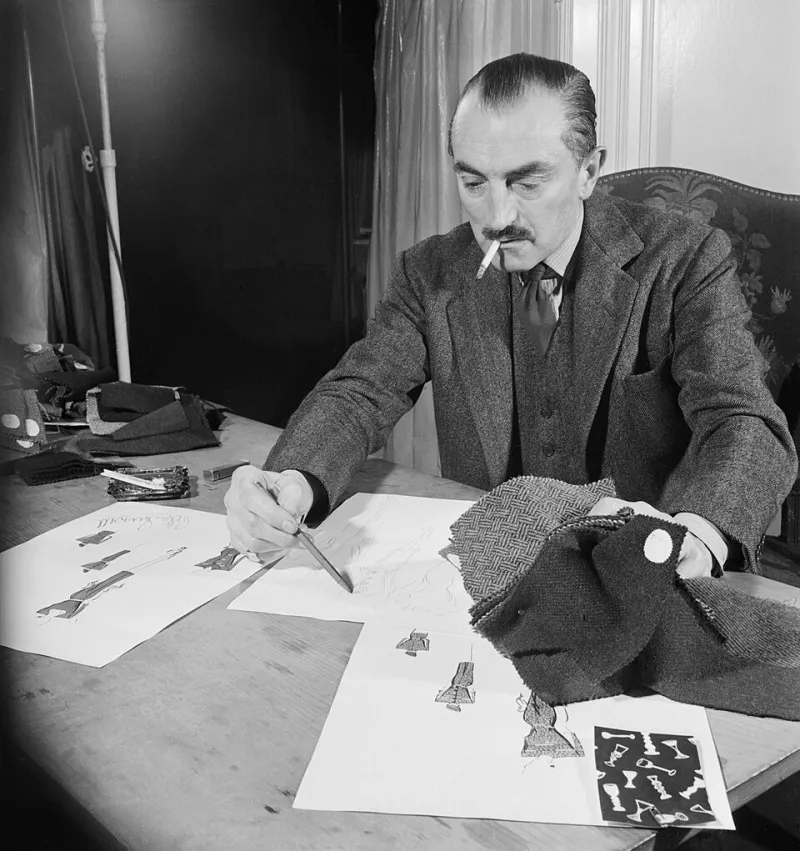
Photo: Ministry of Information Photo Division Photographer, Public domain, via Wikimedia Commons
There is a particular hour in the Garment District — early, before the delivery trucks double-park along the avenue — when the studio is at its most honest. The mannequins stand half-dressed. Swatches from last season's mills in Italy and Japan are stacked in uneven piles. And somewhere on the table, pinned under a brass paperweight, sits the beginning of everything: a sketch.
What follows is the story of one dress. Not a dramatic gown, not a coat destined for a magazine cover — just a dress, followed from first line to final press. It is, we think, the truest portrait of how this studio works.
Where Every Piece Begins
Jodi Arnold's sketches are not the theatrical illustrations you might picture from fashion school lore. They are working documents: quick, gestural figures rendered in pencil and occasional marker, annotated in the margins with notes like "softer shoulder" or "check drape at hip." A sketch, in this studio, is a question rather than an answer.
The dress in question began as a single line drawn late on a Tuesday — a bodice with an asymmetric seam running diagonally across the front, paired with a skirt that fell just below the knee. The idea was simple: a silhouette a woman could wear to a gallery opening in Chelsea or a client dinner in the Flatiron, without ever feeling costumed.
"A sketch is a promise," as Jodi puts it. "The fabric decides whether you keep it."
The Fabric Makes the First Argument
Before a single pattern is cut, the studio spends days — sometimes weeks — in negotiation with cloth. For this dress, the first candidate was a silk-wool crepe in a deep oxblood. It draped beautifully on the hanger. On the form, it misbehaved: the diagonal seam buckled, refusing to lie flat.
The second option, a heavier double-face wool from a mill Jodi has worked with for over a decade, solved the seam but sacrificed movement. The skirt stood away from the body like armor rather than flowing with it.
The compromise — a mid-weight crepe with a whisper of elastane — arrived three days later from a supplier two blocks away. It was, by every measure, correct. The seam lay flat. The skirt moved. The color, under the studio's north-facing light, read exactly as the sketch had promised.
Fittings, and the Art of the Pin
The first toile — the trial version cut in inexpensive muslin — is where a garment begins to tell the truth. On a Thursday morning, the dress was assembled roughly, seams basted rather than finished, and fitted on the studio's dress form, adjusted to the sample size measurements.
The problems revealed themselves quickly. The armhole gaped at the back. The diagonal seam, so elegant in two dimensions, sat a half-inch too high, pulling the eye toward the shoulder instead of the waist. A patternmaker's solution followed: a subtle rotation of the side seam, a sliver taken from the shoulder dart, three pins placed and then two removed.
This is the part of the process no runway photograph captures. A fitting is a conversation conducted entirely in pins and chalk. By the third fitting, the dress had absorbed a dozen small revisions, each one invisible in the final piece but essential to how it sits on a body.
Problem-Solving in Real Time
Not every challenge is solved in-house. When the studio's chosen lining was discontinued mid-season, the team spent an afternoon on the phone with suppliers across the country before finding a substitute with the same hand-feel. When the zipper tape arrived in the wrong shade of oxblood, it was hand-dyed in the studio kitchen sink — a solution that is equal parts ingenuity and necessity, and one that would surprise no one who has spent time in a New York workroom.
The skirt's hem presented its own puzzle. A standard finish felt heavy; a rolled hem felt flimsy. The answer was a hand-finished blind hem, adding hours of labor but leaving the skirt's fall completely uninterrupted. It is the kind of decision that never appears on a cost sheet as "design," though it is design in its purest form.
The Final Press, and the Final Look
On the tenth day, the dress was finished. Steam rose from the pressing board as the last creases were coaxed from the seams. On the form, it looked — there is no better word — inevitable, as though it could never have been anything else.
But the studio knows better. Behind that inevitability lies a buckled seam, a discontinued lining, a hem debated over lunch. When the dress eventually appears in a lookbook, photographed against a plain backdrop, what viewers will see is elegance. What the studio sees is a record of decisions.
That, ultimately, is what craftsmanship means here: not perfection on the first attempt, but the patience to make something right over time. Every piece in the collection carries that history quietly in its seams.
Why It Matters
For the woman who wears the finished dress, none of this backstory is required. The garment stands on its own. But knowing the journey — the fabric negotiations, the pin-pricked fittings, the hand-dyed zipper — changes how a piece feels on the body. It becomes less a purchase and more a participation in a process that is, at its heart, deeply human.
In a city that never slows down, this studio still believes in making things slowly. One sketch. One dress. One seam at a time.