The Ledger Behind the Look: What One Sample Asks of a New York Studio
The sample is the first garment that can be touched, but it is not the first garment that can be sold. In the Jodi Arnold NYC studio, a sample begins as a set of decisions—silhouette, proportion, cloth, finish—and ends, if the work goes well, as a working document. Between those two points sits a ledger that few customers ever see. This is not an argument for mystery. It is an argument for accuracy. In 2026, the cost of one sample is not a single number but a sequence of small, necessary commitments.
A Sample Is a Working Document
A sample is not a miniature production run. It is a test of whether an idea can survive contact with a body, a fabric, and a fitting room mirror. The first sample often carries the burden of proof. It must show whether a shoulder sits correctly, whether a seam line follows the intended architecture, and whether a cloth has the temperament for the shape. For that reason, a sample is allowed to be imperfect. It is not allowed to be vague.
Paper, Muslin, and the Cost of Getting It Wrong
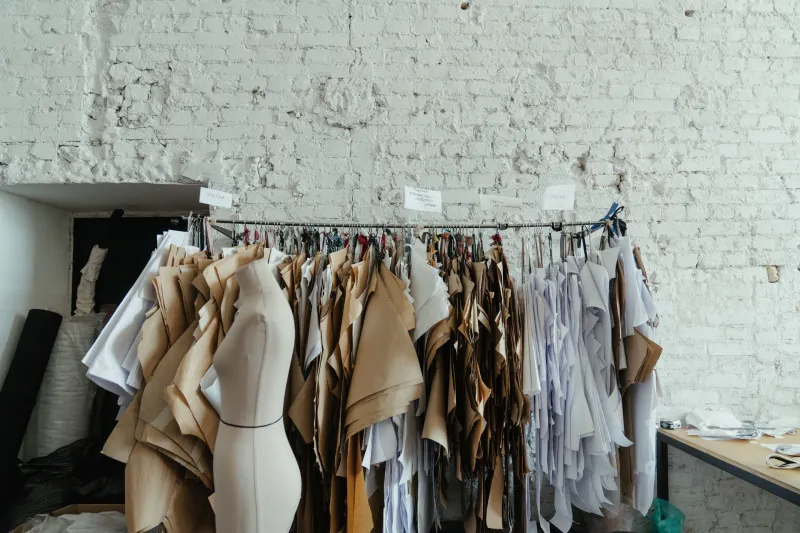
The first line in the ledger is rarely glamorous. Pattern paper, drafting tools, and the patternmaker's time precede any cloth. A pattern must be drafted, checked, and often redrawn before a muslin is cut. Muslin itself is an expense, but the greater cost is the labor of translation: turning a sketch into a three-dimensional proposal. When a designer asks for a second muslin, the charge is not merely fabric. It is the cost of learning. In a New York studio, where space and time are both finite, every revision has a shadow price.
The Sample Maker's Hours
The sample maker is the person who gives the idea a temporary body. Their hours are the largest single item in most sample ledgers, and they are also the most misunderstood. A sample maker is not simply sewing a garment. They are interpreting a pattern, adjusting construction, and flagging problems that a sketch cannot reveal. A tailored jacket may require multiple fittings across several days. A dress may require a bias cut that behaves differently on the stand than on the table. The clock is not padding. It is the cost of expertise.
Fittings Are an Editing Process
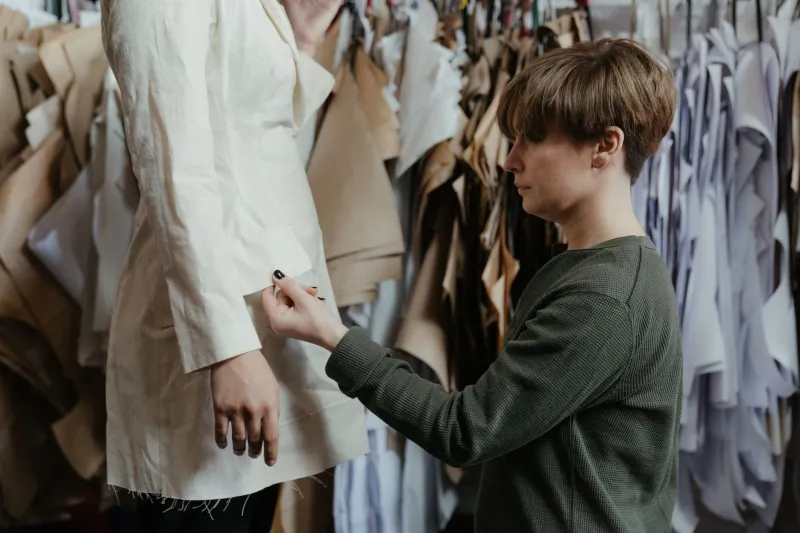
A fitting is not a photo opportunity. It is an editing session. A fit model comes to the studio, the sample is placed on a body, and the garment is read for line, balance, and movement. Pins mark decisions. A shoulder may need to be raised; a waist seam may need to travel; a sleeve may need to be reset. Each change generates another task, and sometimes another sample. The fitting room is where a designer learns whether the garment has a point of view or merely a shape. That education is billed in hours, not in inspiration.
Trims, Revisions, and the Invisible Iterations
Trims are small and expensive out of proportion to their size. A zipper, a button, a hook-and-eye, a label, a hanger loop—each is a decision with a cost. But the more significant expense is revision. A sample may be remade because a fabric was wrong, because a proportion was off, or because a fit session revealed that the original idea was more elegant in theory than in practice. These revisions are not failures. They are the studio's method. Still, they are line items. The ledger does not romanticize them.
The Ledger, Read Plainly
If one adds pattern work, muslin, sample maker hours, fit sessions, trims, and revisions, the total for a single sample can easily reach several hundred dollars and, for complex tailoring, more. In 2026, that figure may surprise a shopper who compares a sample to a finished product. But the comparison is false. A sample is a prototype, and prototypes are meant to absorb uncertainty. They are the cost of finding out. They are not the cost of production, and they are not the cost of the final garment.
Why a Sample Is Not a Product
A sample lacks the economies of a production run. It is cut in ones, sewn with extra attention, and fitted on a schedule that production cannot afford. It may be revised after the fit and remade before approval. It may never reach a lookbook, and it may never be sold. That does not make it wasteful. It makes it preliminary. The sample's purpose is to protect the final garment from guesswork. The customer who wears the finished piece is, in a sense, wearing the result of decisions that were tested before they were repeated.
What the Ledger Teaches the Wardrobe
The lesson is not that clothes should be expensive. The lesson is that value has a biography. A garment that fits well and lasts is not an accident. It is the visible end of a process that included invisible costs: paper, muslin, hours, fittings, trims, and revisions. At Jodi Arnold NYC, the sample ledger is a reminder that the studio's work begins long before a collection is photographed. It begins with a question, and it is answered one line item at a time.