The Seam Allowance Doesn't Lie: A Nine-Point Inspection for Clothes That Last
Before a garment is allowed into my studio wardrobe—or into a gift box in late 2026—it passes a quiet examination. The label is the last thing I consider. In the sample room, trust is built from the inside out: the density of a buttonhole, the width of a seam allowance, the way a lining hangs when no one is looking. These are not luxuries reserved for high price points. They are decisions, and they are visible to anyone willing to turn the garment inside out.
The Buttonhole, Up Close
A buttonhole is a small contract between garment and wearer. I open and close it several times. The edges should be dense and clean, not loose or frayed. On a well-made example, the thread covers the raw edge completely; no fabric peeks through. The cut should be straight, with a neat keyhole if the design calls for one. In the sample room, I keep a loupe near the cutting table for exactly this inspection. A buttonhole that fails here will fail in a coat check line or at a holiday dinner. It is the first point of proof.
The Button Itself
Then the button. I prefer natural materials—corozo, horn, wood—but material matters less than attachment. A shank should allow the button to sit above the fabric without crushing it. The thread should be knotted securely on the reverse, not left as a loose tail. I tug gently. If a button rotates loosely or spins without resistance, it will not survive a season. A spare button sewn inside the facing is a small courtesy, but it is also a confession: the maker expects wear.
Seam Allowance and Inside Finish
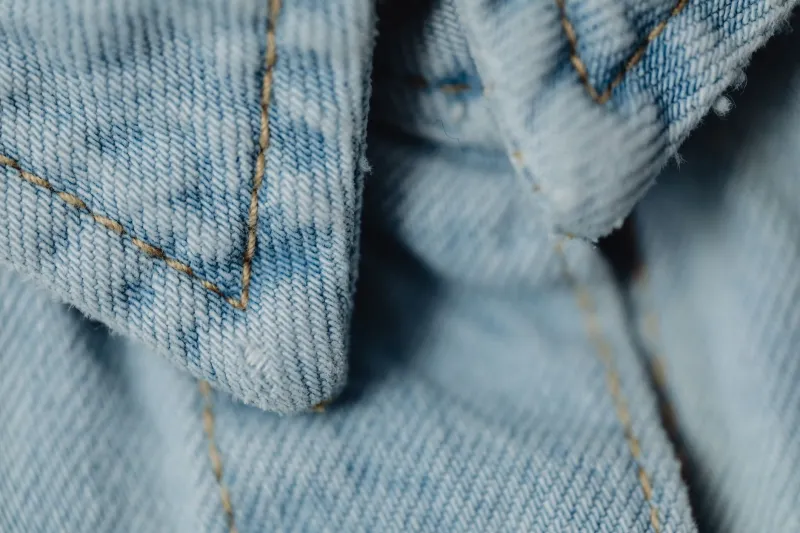
The inside of a garment should be as considered as the outside. I look at seam allowances: are they wide enough to prevent fraying, and finished with an overlock, a French seam, or a bound edge? A narrow, raw seam is not a design choice; it is a shortcut. On tailored pieces, I check whether the seam allowances are pressed open and whether the waistband or facing is cleanly attached. The inside does not need to be decorative, but it should be orderly. A garment that is messy inside will eventually become messy outside.
Interfacing and Structure
Structure is often invisible until it fails. I press a collar or placket between my fingers, feeling for bubbles, stiffness, or a papery hand. Good interfacing should support the fabric without announcing itself. On a jacket, I check the roll of the lapel and the way the canvas or fusible behaves at the edge. In the studio, I have seen sample collars that looked perfect on a hanger and collapsed after one wearing. The fix is not cosmetic; it is construction.
The Lining and Its Breathing Room
A lining should move with the garment, not against it. I check for a pleat at the center back, enough ease across the shoulders, and a hem that hangs slightly above the outer hem. The lining should not pull at the armhole or twist at the sleeve. If it does, the garment will never sit correctly. I also look at the fiber content: a breathable lining is a practical kindness, especially for pieces worn indoors during the holidays.
Match and Pattern Alignment
On striped, checked, or plaid fabric, I look for alignment at the center front, side seams, pockets, and yoke. Perfect matching is not always possible—some curves demand compromise—but the effort should be visible. A pocket that interrupts a stripe without reason is a distraction. A center front that shifts by a quarter inch will be noticed every time the garment is worn. Pattern matching is a form of respect for the cloth.
Hem and Stitch Length
I turn the hem and measure with my eye. A deeper hem gives weight and allows for future alterations. The stitching should be even; on a blind hem, the catch stitches should be nearly invisible from the right side. I check for puckering, which suggests tension problems or poor pressing. A hem is the last thing to be sewn and often the first thing to fail. It deserves a moment of attention.
Zippers, Hooks, and Hardware
A zipper should glide without snagging. I look at the tape: is it stable, and does it lie flat? On an invisible zipper, I check that the seam closes cleanly over the teeth. Hooks and eyes should be firmly sewn and aligned. Hardware—buckles, snaps, D-rings—should feel solid, not hollow. These are the small mechanics of a garment. When they work, they disappear. When they fail, they ruin the experience.
The Label and Care Information
Finally, the label. I read fiber content and care instructions, not for prestige but for honesty. A garment that cannot be cared for will not be worn. I look for accurate origin information and clear washing guidance. A label is not a substitute for quality, but it is part of the contract. If the care instructions are vague, I ask myself whether the maker has thought about the garment after purchase.
The Nine-Point Habit
These nine checks take less time than trying on a coat. In late 2026, as holiday gifting and wardrobe investment decisions arrive together, they are a useful discipline. A garment does not need to be expensive to pass; it needs to be considered. The seam allowance does not lie, and neither does a buttonhole. When the details are right, the label becomes almost irrelevant. That is the quiet confidence I look for—and the standard I keep in the studio.