The Cloth Speaks First: A Studio Test for Fabric That Earns Its Keep
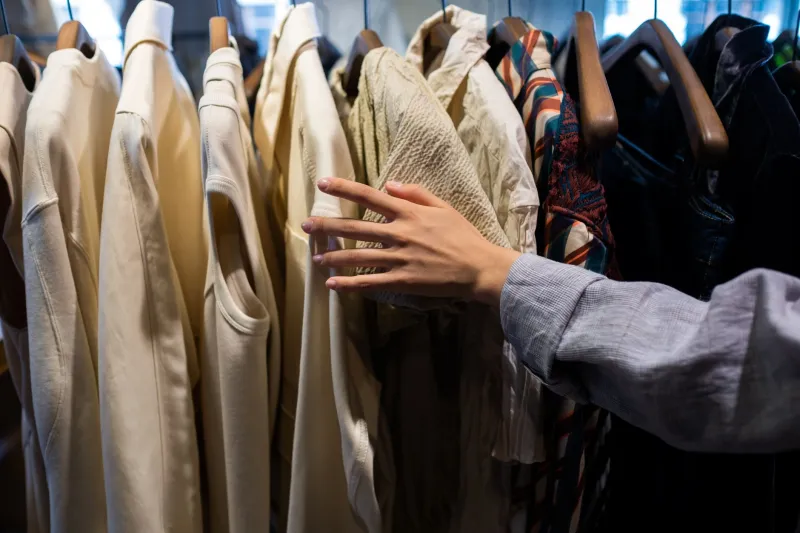
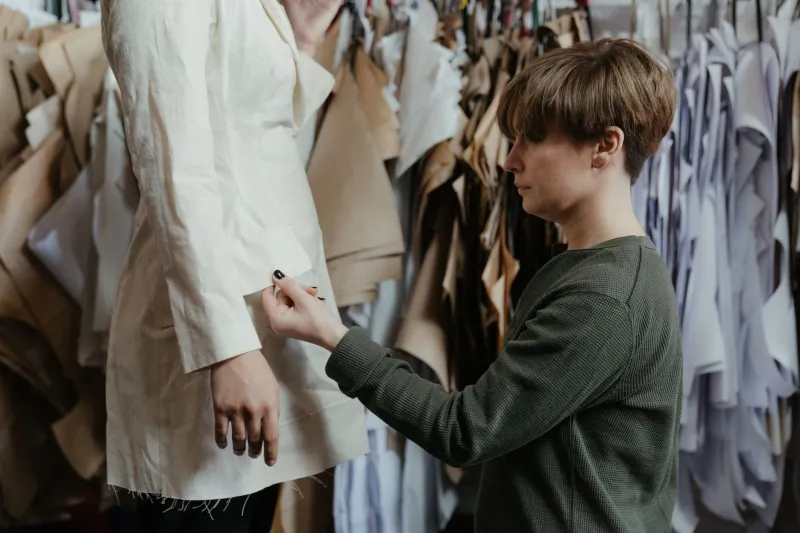
In a Midtown fitting room, a garment can look promising under warm light and still fail the first handshake. The tag may say cotton, wool, or a blend with a reassuring percentage, but the cloth itself has already begun to answer a more useful question: how will this behave after a morning commute, an afternoon at a desk, and an evening that ends in a cold wind tunnel of a street? At the Jodi Arnold NYC studio, we handle fabric long before we read its label. The hand is the first interview.
The Label Is a Résumé, Not a Reference
Fiber content is regulated, useful, and incomplete. It records ingredients, not architecture. A 100 percent cotton can be dense and dry-handed or thin and slippery depending on yarn twist, weave density, and finishing. A wool blend can feel luxurious and still pill within a week if the fibers are short and loosely spun. The label tells you what a cloth is made of; it does not tell you how it will recover at the elbow, whether it will sag at the seat, or if it will greet a seatbelt with a halo of fuzz.
This is why we treat the tag as the last document in the file, not the first. Before a fabric earns a place in a collection, it is pinched, draped, listened to, and rubbed. The same five-minute sequence works in a store. It requires no equipment beyond a pair of hands and a willingness to look slightly odd near the mirror.
The Studio Sequence: Five Signals, Five Minutes
1. The pinch and release
Gather a handful of cloth at a side seam or sleeve, hold for three seconds, and release. A fabric with good recovery springs back toward flat. A fabric that holds the crease of your fist like a receipt will likely bag at the knee, seat, or elbow. Test both with the grain and across it; some cloths recover in one direction and surrender in the other. In the studio, we look for a quick, quiet return, not a snap. Snap can mean stiffness; slack can mean fatigue.
2. The fall
Lift the garment by one shoulder and let it hang. Does it fall in clean, gravity-led folds, or does it stand away from the body like a paper lantern? Drape is not a virtue in itself; it is a match between cloth and cut. A fluid dress wants a cloth that moves; a tailored jacket wants a cloth with enough body to hold a line. When the two disagree, the garment will fight the wearer all day. The fall is where you see the argument begin.
3. The listen
Rub a small section of cloth between thumb and forefinger near a seam, close to your ear. Crisp rustle can signal a coating or a finish that may crack with wear; near silence can signal softness, but also a loose, weak construction. Neither sound is automatically good or bad. The question is whether the voice fits the job. A rain shell should sound like a rain shell. A cashmere scarf should not.
4. The surface rub
Rub your thumb across a hidden area ten times, then inspect. Loose fibers, fuzz, and small balls are early warnings. Look next at the places a floor sample has already been tested by strangers: underarms, cuffs, inner thighs, the lower back where a bag rests. If pilling has begun there, it will not improve at home. Pilling is often a story of friction and fiber length, not of price.
5. The light test
Hold the garment near a window or under a neutral light. Check density: can you see more light through the cloth than the design intends? Are slubs and irregularities deliberate or accidental? Look along the seams for puckering, and at the lining for twist. In New York, where a heated shop gives way to a cold sidewalk, a cloth that looks opaque indoors can turn translucent in daylight. The window is an honest editor.
The Fitting-Room Version
In a store, wear the garment for five minutes before deciding. Sit down. Raise your arms. Walk the length of the department. Then return to the mirror and repeat the pinch-and-release at the side seam. Check for horizontal pull lines across the bust, back, and hips; they signal that the cloth is working against the cut. Examine the cuffs and underarms for existing pills. Ask about the return policy, and treat dry-clean-only care as a cost, not a compliment. A fabric that requires delicate handling can still be worth it, but the hand should tell you why.
What the Hand Cannot Tell You
The hand is not a laboratory. It cannot certify fiber origin, chemical finishes, or exact percentages, and it should never replace care instructions or allergy information. Labels still matter. They simply arrive second. When the tag and the hand disagree, trust the behavior you can feel and see. A cloth that recovers, drapes, and wears well will keep its promise longer than a percentage ever can.
A Short Field Card
- Pinch and release: look for quick recovery, not a permanent crease.
- Lift and let fall: check that drape matches the cut.
- Rub and listen: match the cloth's voice to its purpose.
- Inspect friction points: underarms and cuffs reveal pilling first.
- Use daylight: density and finish are more honest near a window.
The hand is not sentimental; it is empirical. In a city of overheated shops and cold streets, cloth must move, recover, and hold its shape through a real day. Read the fabric first. The label can wait until the end.