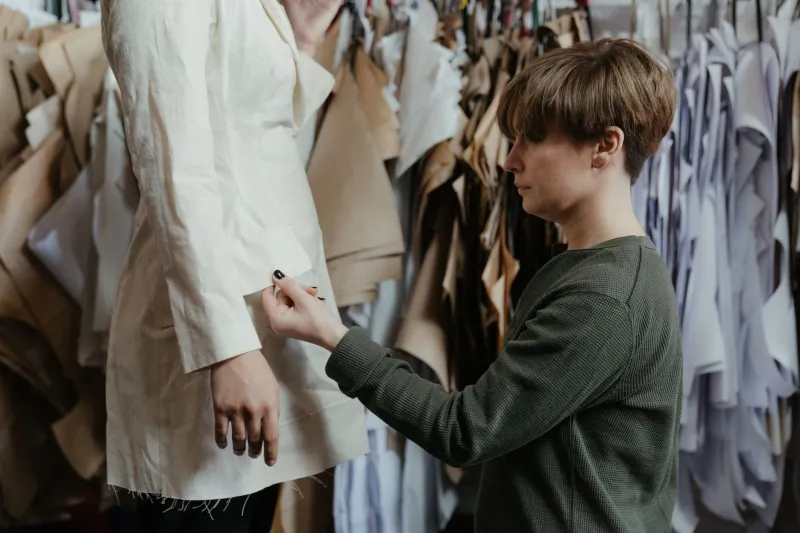
The Garment Between Seasons: A Studio Method for Storing Clothes in Small New York Apartments
There is a moment in the studio when a collection leaves the rail and enters the world. The samples are photographed, the fittings concluded, the garments packed for showroom and press. What follows is less visible but no less important: the question of how those clothes will be kept when the season turns. In New York apartments, where closets are often shallow and radiators are enthusiastic, storage becomes a design problem in its own right. The answer is not more space. It is a more deliberate method.
Storage Begins Before the Closet
The first rule of off-season storage is that nothing should be put away dirty. This is not a matter of fastidiousness but of fiber. Body oils, invisible on a dark wool trouser, oxidize over time and attract moths. Perspiration salts can yellow a silk blouse at the underarm even in a dark drawer. The studio practice is simple: garments are aired, brushed, and cleaned according to their fiber before they are folded or hung. Wool coats and cashmere knits are cleaned at the end of the season, not the beginning of the next. Stains that seem faint today become fixed with time and temperature. A garment stored clean has a far better chance of emerging intact.
The Right Hanger for the Right Shoulder
A hanger is a tool, and like any tool it should match the task. Wire hangers are the enemy of tailored clothing; they distort the shoulder line and leave the garment to bear its weight on a narrow edge. For jackets, coats, and dresses with structure, a broad wooden or padded hanger supports the shoulder seam and allows the garment to hang as it was designed to hang. For silks and bias-cut pieces, a padded hanger prevents the shoulder from collapsing into a crease. For skirts and trousers, clip hangers are acceptable only when the clips are padded; bare clips leave marks that pressing cannot always remove. In a small closet, uniformity helps, but correctness matters more. The hanger should be chosen for the garment, not for the visual harmony of the rail.
Fold, Don't Hang, When the Knit Asks
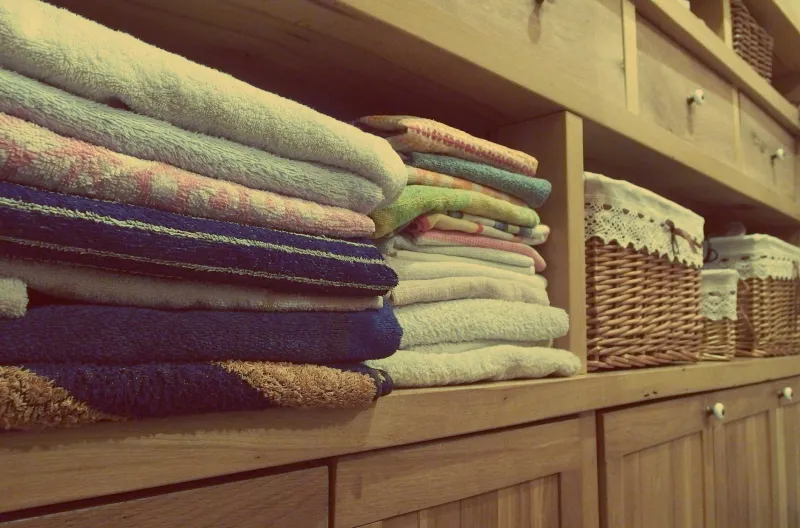
Knitwear is the category most often ruined by good intentions. A heavy sweater hung on a hanger will stretch at the shoulder and lengthen at the body; by the time it returns to the wardrobe, it has changed shape. The studio method is to fold knits flat, with tissue paper at the fold lines to soften the crease. Cashmere and fine merino are stored in breathable boxes or on shelves, never compressed under heavier items. Bulky sweaters are best kept in a single layer or lightly stacked with tissue between them. If shelf space is scarce, a clean cotton pillowcase can serve as a soft, breathable envelope. The principle is consistent: support the knit, do not suspend it.
Breathable Bags and the Case Against Plastic
Dry-cleaning plastic is a temporary garment bag, not a storage solution. It traps moisture and solvents against the cloth, and in a humid New York summer it can encourage yellowing and odor. The alternative is a breathable garment bag in cotton or a non-woven fabric, preferably with a clear window for identification and a full-length zipper for easy access. For coats and dresses that must hang, these bags protect against dust without sealing the garment in. Cedar blocks or lavender sachets may be placed nearby, but they should not touch the cloth directly. Moth prevention is a matter of cleanliness, air circulation, and vigilance—not of scent alone.
Whites, Silks, and the Problem of Light
Whites deserve their own discipline. They should be stored in acid-free tissue or a clean cotton bag, away from direct light, which can yellow natural fibers over time. Wooden shelves can transfer oils to white linen; a barrier of acid-free paper or washed cotton helps. Silks are equally sensitive. They should be rolled rather than sharply folded when possible, with tissue between layers, and kept out of prolonged sunlight. A silk garment stored in a breathable bag in a dark closet will hold its color far better than one left on an open rail near a window. These are small adjustments, but they are the difference between a garment that lasts several seasons and one that lasts many.
A Small Apartment, a Disciplined Closet
In a city where storage is finite, the temptation is to compress. Vacuum bags promise space, but they can crush structure and trap fibers in unnatural folds. Overcrowding is equally damaging: clothes need air to recover, and a packed rail abrades fabric every time a hanger is moved. The studio method favors fewer, better pieces and a clear seasonal edit. Out-of-season items are stored in labeled boxes or bags, with a note of contents if the container is opaque. The closet itself is kept to what the season requires, with a small allowance for transitional pieces. This is not minimalism as an aesthetic; it is a practical response to limited space and a way of protecting the clothes one has chosen to keep.
The Second Half of Design
Storage is often treated as aftercare, something that happens after the design is finished. In the studio, we see it differently. A garment is not complete when it is sewn; it is complete when it is worn, cleaned, stored, and worn again. The hanger, the tissue, the breathable bag, the acid-free box—these are not glamorous objects, but they are part of the garment's life. For US wardrobes built on fewer, better pieces, care is not a seasonal chore. It is the quiet practice that allows a good garment to remain good. The closet, in that sense, is not a place where clothes wait. It is where the second half of design begins.