The Unposted Wardrobe: On Dressing for a Life, Not a Feed
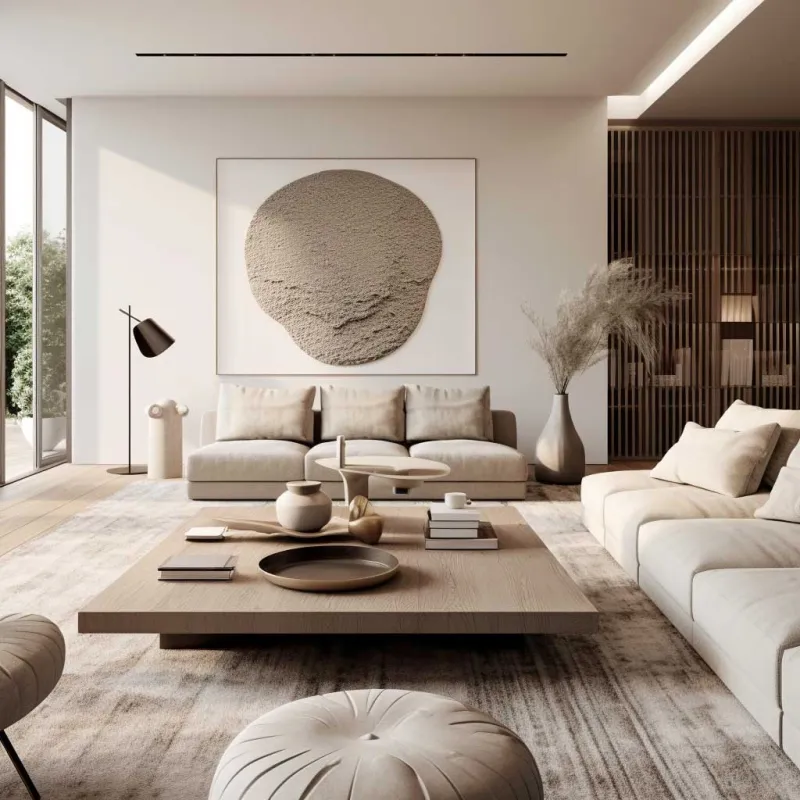
Photo: minimalist fashion studio clothing rack natural light New York designer, via artfasad.com
In the studio, there is a rail that does not go to press. It sits slightly apart from the samples photographed for the lookbook—the pieces that must read at a distance, hold a silhouette under strobe, and survive the crop. This other rail holds what I have come to call the no-photo clothes: garments that never make it to social media, not because they lack merit, but because their merit is private. They are chosen for how they feel in a real life, not how they perform for an audience.
That distinction has become harder to keep. In 2026, the wardrobe is routinely treated as content. A new coat is documented before it is worn; a dress is judged by its first photograph rather than its fifth wearing. Editorial image-making has its own grammar—light, posture, backdrop, the careful arrangement of a hem—and it is a legitimate craft. But it is not the same craft as getting dressed. Confusing the two is one of the quiet ways a person loses track of her own taste.
The Camera Is a Narrow Room
A photograph rewards certain things: contrast, clarity, a clean line, a color that holds up on a screen. It does not reward the way a silk crepe moves when you walk three blocks to the subway. It cannot record the interior finish that keeps a wool dress from clinging in February, or the particular weight of a sleeve that makes you forget you are wearing it. The camera is a narrow room. A garment can be spectacular inside that room and uninhabitable outside it.
The reverse is also true, and more interesting. Some of the most useful clothes in a wardrobe are almost impossible to photograph well. A dress in a soft, slightly irregular gray may look like nothing on a hanger. On a person, in motion, in daylight, it becomes a second skin. A jacket with a slightly dropped shoulder may not read as “new” in a still image, but it may be the piece you reach for every day from October through April. These are not compromise clothes. They are clothes that have been designed for a different set of conditions: the conditions of an actual day.
A Studio Anecdote, Told Carefully
Several seasons ago, during a fitting, a client stood in front of the mirror in a dress that had been giving us trouble on camera. The color was difficult—a brownish plum that went flat under studio lights and looked muddy on a phone screen. The silhouette was simple to the point of stubbornness. We had already decided it would not go into the lookbook. Then she put her hands in the pockets, turned slightly, and said, “I would wear this to pick up my children and not think about it again.”
That is not a small thing. The phrase “not think about it again” is one of the highest compliments a garment can receive. It means the dress has stopped asking for attention. It has become equipment for living. We kept it in the line, photographed it plainly, and sold it quietly. It has since become one of those pieces customers mention only after they have owned it for a year. They do not describe it as a statement. They describe it as the dress they wear.
Why the No-Photo Dress Matters
There are practical reasons to keep a portion of the wardrobe unposted. The first is decision fatigue. A closet built for display often requires more editing each morning than a closet built for use. The second is privacy. Not every good outfit needs to be public, and not every private pleasure needs to be converted into evidence. The third is style itself. Personal style develops in the repetition of unremarkable choices—the same jacket, the same trousers, the same dress worn until it knows your body. That repetition is rarely photogenic. It is, however, how a wardrobe becomes yours.
There is also the matter of imperfection. A no-photo garment can have a small flaw—a seam that softens after washing, a color that shifts in different light—and still be loved. The camera tends to demand resolution. Real life allows ambiguity. Clothes that live outside the feed can carry the evidence of use: a faint crease at the elbow, a hem that has been let down once, a button replaced with one that is almost right. These are not failures. They are records.
A Practical Guide to Recognizing Your No-Photo Clothes
The Tuesday test. Imagine wearing the garment on an ordinary Tuesday, with no event and no photograph. If you would still choose it, it belongs. If it only makes sense with an audience, it may be a costume.
The reach test. Notice what your hand goes to when you are tired, rushed, or indifferent. The no-photo dress is usually the one you put on without a mirror. It is not necessarily the most flattering piece you own; it is the most reliable.
The second-wear test. A garment that photographs beautifully may be exhausting to wear twice in a month. A no-photo garment often becomes easier with repetition. If the second wearing is better than the first, you are learning its language.
The quiet-color test. Be suspicious of colors that only work under strong light. A color that holds your face in flat daylight, in a car, in a kitchen, is doing more work than a color that only performs on camera.
The alteration test. A no-photo garment is worth altering. If you are willing to spend money on a hem or a shoulder seam for a piece no one will see online, you have identified something real.
The nobody-else test. Ask whether you would wear it if no one you knew would see it. If the answer is yes, the garment is not for the feed. It is for you.
What the Rail Knows
In the studio, we still make lookbook pieces. We still think about image, because image is part of the work. But the rail of no-photo clothes keeps the balance honest. It reminds us that a collection is not only a set of pictures. It is a set of decisions about how people will live. The most important of those decisions are often made in private: a dress that does not photograph well but feels right, a jacket that never gets posted but gets worn until the lining gives out.
The no-photo dress is not an argument against beauty. It is an argument for a different kind of beauty—one that does not require an audience to complete it. A garment can be quietly excellent and still go unposted. In fact, some of the best ones do. They are worn, repeated, and kept. That is enough.